
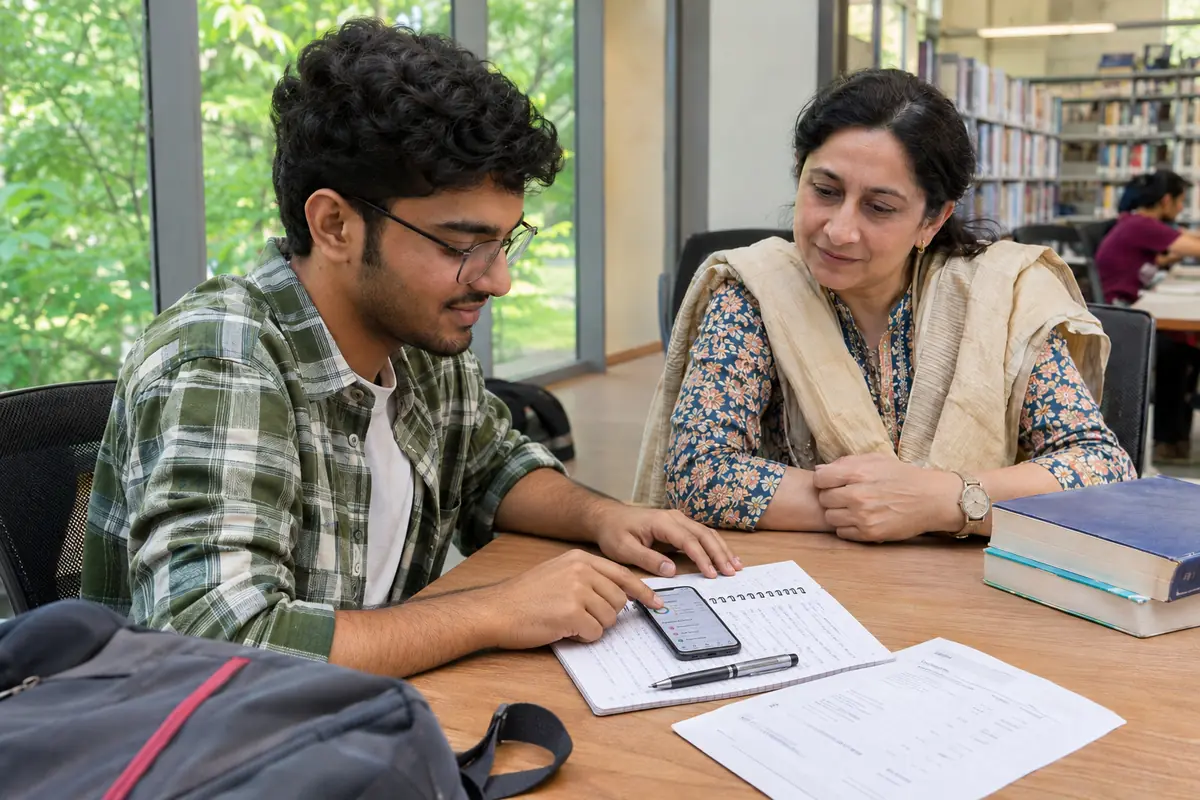
India Islamic P2P loans for students are interest-free ways of paying for education through individual lenders, community funds or trusts, with repayment of the principal only. They concern students and families who want to fund tuition, hostel and exam costs without conventional interest. Regulated NBFC-P2P apps supervised by the Reserve Bank of India price their loans with interest, so most genuine Qard Hasan education support runs through scholarship trusts, alumni circles and community committees rather than through licensed lending apps.
The cost of study and why families borrow
Education spending goes well beyond tuition. Hostel rent, books, laptops, coaching, exam fees, travel and, for overseas courses, visas and living costs add up quickly.
Many families in smaller towns have limited savings and no collateral. Professional courses such as engineering, medicine or management can be expensive, and a family may need money at the start of the year when fees fall due.
For parents who avoid interest, a bank education loan raises a religious concern as well as a financial one. They look instead for community support, scholarships and lenders who accept only the principal back.
India Islamic P2P loans for students: what to check first
Education has long been a favoured purpose for benevolent loans. In a Qard Hasan, a donor or fund lends the student's family a sum for fees, and the family repays it later, often after the student starts working.
Several community organisations, alumni groups and trusts operate such schemes. Some require repayment in easy instalments, others allow the beneficiary to start repaying only after graduation.
Applicants are usually asked for admission proof, a fee statement, family income details and references. Where funds are limited, merit and need together decide who receives support.
Scholarships and grants that need no repayment
The best funding is often money that never has to be returned. Government scholarships, institutional fee waivers, minority welfare schemes and charitable trusts support deserving students in many fields.
Zakat funds, where eligible, can also support students in financial need under the rules for beneficiaries. Students should apply early and keep documents such as income certificates and mark sheets ready.
- start the search months before the academic year
- apply to several schemes and keep deadlines in a diary
- read eligibility conditions carefully
- avoid agents who charge fees to process scholarship forms
Combining a grant with a small interest-free loan is often more realistic than seeking one large sum.
Regulated P2P apps and their limits
Peer-to-peer platforms licensed in India as NBFC-P2P connect lenders and borrowers. They cannot lend from their own funds or guarantee repayment, and the Reserve Bank of India caps what individuals may borrow or lend.
A borrower can hold at most Rs 10 lakh outstanding across all platforms, a single lender may place at most Rs 50,000 with the same borrower, and the longest loan term is 36 months. The short term suits modest amounts, not a four-year degree.
Since lenders on these platforms seek a return, the loans charge interest. A family with a strict interest-free requirement should treat them with care, and a student without income will usually need a co-borrower.
Overseas study and special cases
Studying abroad involves a much larger budget, including tuition, living costs, health cover and visa fees. Few community funds can cover this in full, so students usually combine savings, a scholarship and a family loan.
Currency changes can raise the cost during the course, which is another reason to keep borrowing modest. Students planning overseas study should check whether a lender allows repayment in instalments after return, and whether obligations arise in the destination country.
Postgraduate and professional courses, such as medicine, law or research programmes, may qualify for dedicated funds from alumni networks, so the institution's welfare office is a useful first stop.
Preparing a request for support
A well-prepared request improves a student's chance with any funder. Documents commonly needed include:
- admission letter and fee schedule
- previous academic records
- identity and address proof of the student and parent
- family income evidence
- a statement of how the money will be used and repaid
A short personal note describing goals and plans for repayment helps lenders see the human side. Students should be honest about other sources of funding, since donors often ask whether others already cover part of the cost.
The role of parents and guarantors
Parents often stand as guarantors, and in an interest-free community arrangement a respected relative may sign for a young borrower. That responsibility is serious, because the guarantor must pay if the student cannot.
Families should discuss openly how much they can afford each month, and who will pay if the student's first job is delayed. A written family understanding avoids later disputes.
Where the guarantor is elderly, a younger relative or a second guarantor can provide continuity, as an obligation does not disappear if one party falls ill.
Repaying after graduation
A student loan only works if it is repaid. Families should agree a realistic schedule before the money arrives. Repayment may begin after the first job, with smaller instalments at the start.
It helps to write the plan down, and to include what happens if the student is delayed in finding work. A lender who knows the situation will usually be flexible.
Graduates who repay in full often donate to the same fund later, so the next student benefits. This cycle sustains community education funds over decades.
Safety checks for students and parents
Students are a target for fake lenders and misleading websites. Offers of instant approval, requests for advance payments and apps that demand access to contacts should be avoided.
- verify the legal identity and RBI registration of any app
- read agreements before signing
- never share one-time passwords
- keep copies of every payment and receipt
- report harassment by recovery agents to the authorities
Government portals list recognised education loan and scholarship options and should be consulted for comparison. This information is general and does not amount to personal advice or a loan offer.
Choosing a course with the cost in mind
Borrowing for study should be weighed against likely outcomes. A course with strong placement and a manageable fee is easier to repay than one with uncertain prospects.
Students can reduce borrowing by choosing government or aided institutions where fees are lower, living at home where possible, and buying used books. Part-time work or paid internships can cover personal expenses.
The aim is to finish the course with as little obligation as possible, so that the first years of work are free for building a career and a family.
Frequently asked questions
Can I get an interest-free student loan in India?
Yes, mainly through Qard Hasan schemes run by community trusts, alumni groups and charitable funds, which ask for only the principal back. Licensed P2P apps usually charge interest, so they rarely match this need.
Are scholarships better than an Islamic P2P loan?
A scholarship or grant needs no repayment, so it is usually preferable when available. Many students combine a grant with a small interest-free loan to cover the remaining fees and living costs.
What should I check before borrowing from a P2P app as a student?
Confirm that the platform holds an RBI Certificate of Registration as an NBFC-P2P, read the full terms and avoid any app that demands advance fees or access to your contacts. Borrow only what you can repay.
Further reading
- Buddy4Study : Buddy4Study lists scholarships and education loan options for students in India, a practical place to compare grants and loans before private borrowing.