
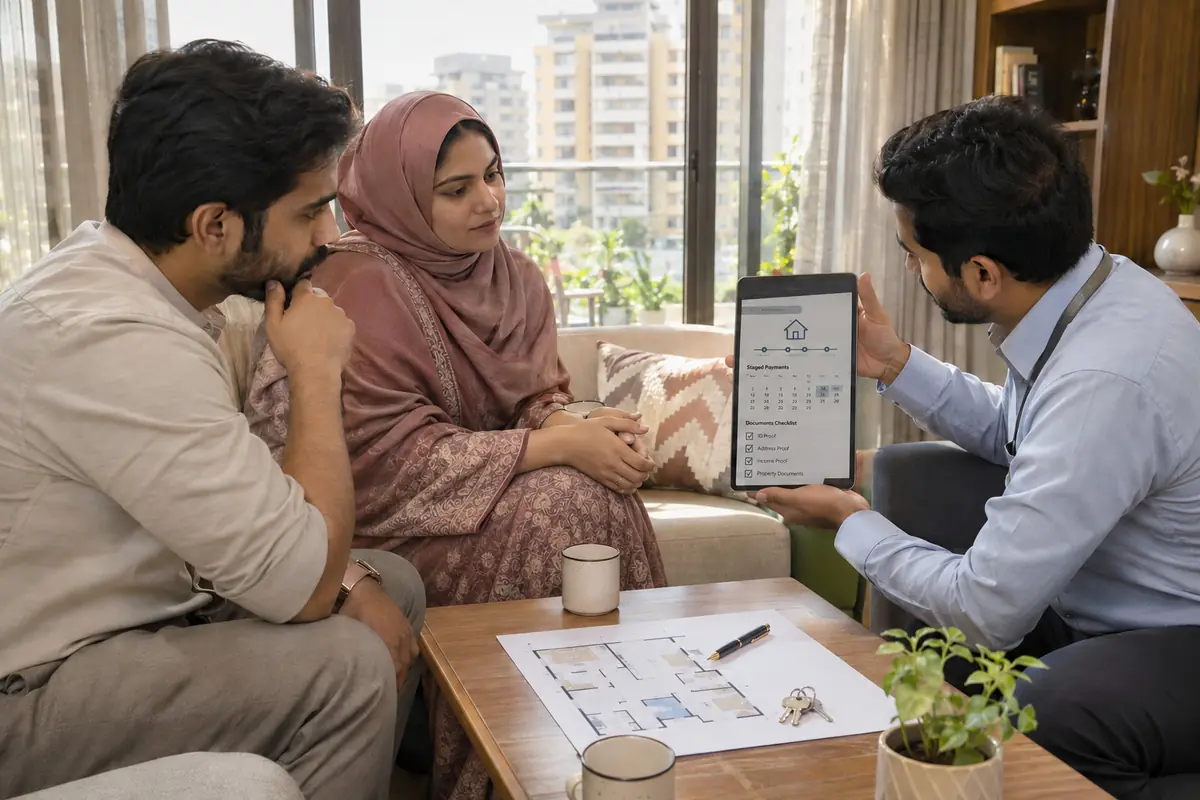
India Islamic P2P interest-free mortgage loans are arrangements in which individuals or community pools fund a home purchase without charging a predetermined interest return. They are meant for Muslim families and other buyers who avoid riba, and they normally rely on a Qard Hasan principal-only advance, a Murabaha sale or an Ijarah lease. Such deals are mostly community, cooperative or charitable systems, not products of RBI-registered NBFC-P2P apps, and they are rarely large enough to finance a whole property on their own. Buyers therefore usually combine them with savings and family support.
Why a mortgage is hard to make interest-free
A home is the largest purchase most families ever make. In India it is typically priced at many times annual household income, which is why conventional buyers rely on long bank loans with interest. Removing interest from that structure forces the lender to find another way to be rewarded, or to accept no reward at all.
Islamic jurists generally accept three broad routes. The first is a gift-like loan, Qard Hasan, where only the principal comes back. The second is a sale with a disclosed mark-up, Murabaha. The third is a lease with an option to buy, Ijarah. Each route changes who owns the property during the repayment period and who carries the risks of ownership.
India Islamic P2P interest-free mortgage loans: what to check first
- Qard Hasan: a benevolent loan. The lender gets back exactly what was advanced, nothing more. It suits smaller sums such as a down payment or a registration cost.
- Murabaha: the financier buys the home, then sells it to the buyer at an agreed higher price paid in instalments. The mark-up is fixed at signing and is a profit on a sale, not interest on money.
- Ijarah with transfer: the financier owns the home and leases it to the occupant. Part of each payment goes towards eventual ownership.
The last two contain a profit or rental element, so they cannot honestly be described as free of any return to the financier.
Where peer funding fits in India
Peer funding rarely covers an entire mortgage. A single person seldom lends enough, and community pools tend to hold modest balances. Their usual role is partial: a bridge for the booking amount, help with stamp duty and registration, or a top-up when a bank or housing finance company approves only part of the price.
Many pools operate through mosque committees, trusts, cooperative societies and neighbourhood savings circles. Members contribute regularly, and approved members draw an advance that is repaid in instalments. Decisions rest on trust and local knowledge, which is both the strength and the weakness of the model.
What the RBI framework says
Platforms that match lenders and borrowers online for a return are NBFC-P2P entities and need a Certificate of Registration from the Reserve Bank of India. They cannot lend from their own balance sheet and cannot guarantee repayment or promise assured returns.
The main limits are a maximum of Rs 50 lakh of total exposure for a lender across platforms, Rs 10 lakh of total outstanding borrowing for one borrower, Rs 50,000 from a single lender to one borrower, and a maturity of at most 36 months. Those ceilings fall well short of the size and tenor of a typical home loan, so a registered app cannot replace a housing loan.
Property checks that matter more than the loan
Whoever supplies the money, the property itself needs scrutiny. A buyer should confirm that the seller holds a clear title, that the building plan is approved by the local authority, and that no encumbrance or dispute is recorded against the land. An advocate who works for the buyer, not the seller, should read the documents.
- Ask for the chain of ownership documents and verify them at the sub-registrar's office.
- Check the encumbrance certificate for the past decades.
- Confirm that an under-construction project is registered under the state real estate regulator.
- Keep every payment traceable through banking channels.
Risks for both sides
The absence of interest does not remove risk. A lender can lose the advance if the buyer's income falls, if the project is delayed or if the title proves defective. A buyer can face pressure from relatives or pool members when repayment slips, and informal agreements are harder to enforce than registered ones.
Written terms reduce disputes. Each agreement should name the parties, the amount, the schedule, what happens after a missed payment and whether any fee is charged. A fixed service fee to cover administration is different from a charge that grows with time and balance, and the difference should be explained plainly.
A buyer's journey and the records to keep
Consider a salaried family in a mid-sized city that has found a flat and can pay part of the price from savings. The first step is a realistic budget: monthly income, existing commitments and a repayment figure that leaves room for emergencies. Only then does it make sense to approach any source of funds.
The family might ask relatives for a Qard Hasan towards the booking amount, approach a local cooperative for the registration costs, and apply to a regulated lender for the balance. Each source needs its own written record, and the repayment dates should be mapped on one calendar so that no instalment competes with another.
Patience is part of the process. Verification of title, loan sanction and registration can take weeks, and rushing to close a deal because an informal lender is ready to pay is a common cause of later regret.
- Sale agreement and registered sale deed, with receipts for every instalment paid to the seller.
- A signed loan or advance note for each peer or community contribution, stating the amount, schedule and any fee.
- Identity and address proofs of every party, since lenders and registrars both ask for them.
- Bank statements showing each transfer, which protect both lender and borrower if a dispute arises.
- Any scholar's written opinion on the contract, kept with the file for future reference.
Choosing between peer funding and a bank product
Some banks and housing finance companies advertise Sharia-oriented or interest-free labels, but buyers should read the contract rather than the brochure. If the instalments are computed on a reducing balance at a benchmark rate, the structure may still be interest in substance, whatever it is called.
A sensible plan often layers sources: savings first, then a community Qard Hasan for the down payment, then the lowest-cost regulated financing for the remainder, with a scholar consulted on whether the chosen contract meets the buyer's own standard. Information about these options is general and is not personal advice or a loan offer.
Frequently asked questions
Can a registered P2P app give me a full home loan?
No. NBFC-P2P rules cap one borrower's outstanding amount across platforms at Rs 10 lakh and loan maturity at 36 months, which is well short of a typical home purchase. Registered apps may help with smaller amounts, but they cannot replace a long-term housing loan.
Is a Murabaha home purchase really interest-free?
It avoids a charge on borrowed money, but the seller adds a fixed profit to the price, which the buyer repays in instalments. Whether that satisfies a particular person depends on the contract's structure and the opinion of a qualified scholar.
What should I verify before taking money from a community pool?
Confirm who the trustees or committee members are, whether the pool is registered as a trust or cooperative, how repayments are recorded, and what happens after a missed instalment. Insist on written terms and traceable bank payments.
Further reading
- National Housing Bank : The National Housing Bank oversees housing finance companies and publishes consumer guidance, making it a useful reference for anyone weighing home financing options and the regulated lenders behind them.