
India Islamic P2P loans bad CIBIL describes peer-to-peer financing without interest for people whose CIBIL score is low, meaning their credit report shows missed payments, defaults or very little history. The score is a three-digit number produced by a credit bureau and used by lenders to judge risk. Regulated NBFC-P2P apps may still check it, while community Qard Hasan lenders often weigh character, income and references more heavily. A low score does not forbid borrowing, but it raises caution for both sides.
What a low CIBIL score signals
A CIBIL score summarises how a person has handled credit. Late instalments, unpaid card bills, settled accounts and many recent loan applications push it down. A person with no borrowing history at all may also have a weak or missing score.
Lenders read a low score as a sign of higher risk and usually respond by refusing the application, asking for security or raising the price. For someone who avoids interest, the problem is greater, because the usual remedy for a risky borrower is a higher rate.
The score is not a verdict on character. Job loss, illness or a medical emergency can damage a record that was once clean, and many borrowers with low scores are trying to recover from a temporary shock.
India Islamic P2P loans bad CIBIL: key points before you decide
Regulated P2P marketplaces in India are NBFC-P2P entities licensed by the Reserve Bank of India. They normally collect credit data, income information and bank statements to grade a borrower, and they pass that grade to lenders who choose whom to fund.
A weak score can mean a lower grade, a smaller amount or no listing at all. Platforms cannot lend from their own funds or guarantee repayment, so lenders carry the risk themselves.
Rs 10 lakh is the maximum a borrower may hold outstanding across all platforms, and loans may not run beyond 36 months. These limits protect against over-borrowing but do not turn a risky loan into a safe one.
Interest-free community options
Where formal channels close, many borrowers turn to Qard Hasan. A relative, a neighbour or a community fund lends the principal and expects only that amount back. No return is fixed for the lender, which keeps the transaction free of interest.
Some cooperatives and charitable trusts run revolving funds that consider applicants regardless of bureau score. They tend to ask for references, proof of income, and sometimes a guarantor from the community.
- a short written request explaining the need
- identity and address documents
- recent income or business proof
- a realistic monthly repayment plan
- a guarantor or witness where the fund requires one
These systems are not RBI-registered apps. They rely on trust, so records and receipts matter.
Reading the credit report before applying
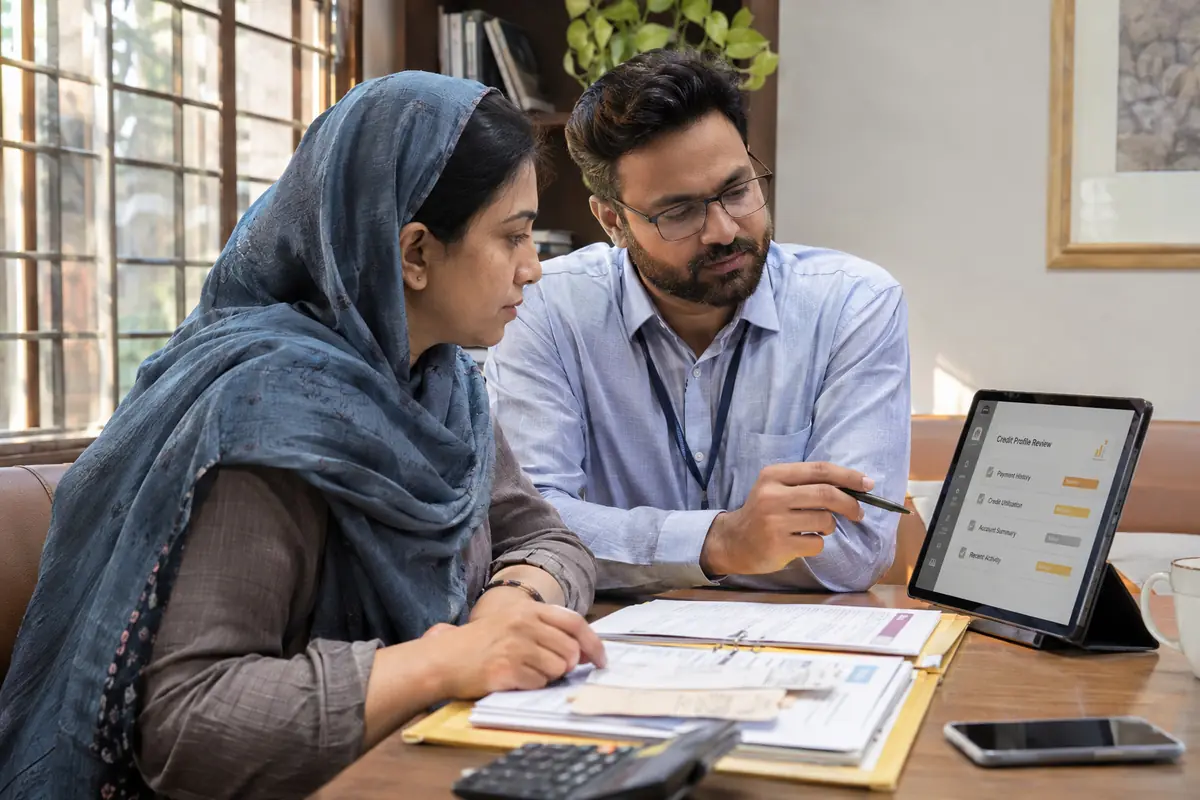
A borrower who knows exactly what lenders will see is in a stronger position. The report lists accounts, payment history, enquiries and any overdue amounts. Errors do occur, such as a loan shown as unpaid after it was closed, or an account that belongs to someone with a similar name.
Reviewing the report also helps decide what to repair first. A single large overdue item may matter more than several small enquiries. Settled accounts remain visible for years, so borrowers should understand how each entry is described.
Because a rejected application can itself leave an enquiry on the record, it is wiser to check eligibility conditions first than to apply widely and hope.
Warning signs and frauds to avoid
People with poor scores are a favourite target for scammers. Offers that promise instant approval whatever the score, or that demand a fee before release, should be treated with suspicion.
- advance charges for processing, insurance or a good score
- apps that read contacts or photographs and threaten to expose a borrower
- unnamed lenders with no verifiable legal identity
- pressure to sign documents without reading them
- promises that the loan will repair the score immediately
A borrower should verify that any app is a registered NBFC-P2P or a lawful lender and keep copies of everything signed. Harassment by recovery agents is not allowed, and complaints can be made to the regulator.
Typical situations behind a low score
No two borrowers arrive at a low score in the same way, and the cause shapes the best response.
- a salaried worker who lost a job and missed several card payments
- a small trader whose customers paid late, delaying his own instalments
- a young person with no history who defaulted on a small gadget loan
- a family hit by a medical emergency that consumed savings
- a guarantor whose friend stopped paying a loan he had stood surety for
In each case, community lenders often listen to the story and ask for proof. A formal app seldom does. Borrowers who can explain the cause and show present stability have a stronger case with personal lenders.
Steps to improve the score
A score recovers slowly through steady behaviour. The most effective habits are simple.
- pay every instalment and bill on or before the due date
- keep card use well under the limit
- avoid applying to many lenders in a short time
- check the report for errors and ask for corrections
- keep older accounts in good standing
Every consumer can request a credit report from the bureaus, and incorrect entries such as an account already closed can be disputed. Repaying a small Qard Hasan on schedule does not appear on the bureau, but it builds personal credibility that supports later requests.
Patience is necessary. Several months of clean payments usually matter more than any single action.
Alternatives before borrowing
Borrowing is not always the first answer. Negotiating with the current creditor for a longer schedule, selling an unused asset, or asking a relative for a gift rather than a loan can spare a fragile record.
Charitable funds such as zakat committees may support those in genuine hardship with grants that need no repayment. Skill training or a second source of income can raise repayment capacity more reliably than any new loan. Where debt is already heavy, speaking with a certified credit counsellor can prevent a spiral.
Choosing a repayment size you can sustain
Borrowers with damaged records often ask for the largest amount available, which is risky. A smaller loan paid in full does more for long-term standing than a large one that slips into default.
Before agreeing, list monthly income, fixed expenses and existing instalments. The new payment should fit comfortably after those, with a margin for an unexpected cost.
Where possible, borrowers can ask for a longer schedule with smaller instalments, since the principal-only nature of Qard Hasan means a longer term costs nothing extra. If a payment cannot be met, telling the lender before the date is far better than silence.
This information is general and is not personal advice or a loan offer.
Frequently asked questions
Can I get an Islamic P2P loan in India with a bad CIBIL score?
It is possible, mainly through community Qard Hasan funds and personal lenders who judge character and income. Regulated NBFC-P2P apps may consider a low score a higher risk, so approval is less likely and not guaranteed.
Will an interest-free loan improve my CIBIL score?
Only if it is reported to a credit bureau, which informal community loans usually are not. Regular repayment of bureau-reported accounts and bills is what lifts the score, so those habits need attention alongside any private loan.
How do I avoid fraud when my credit score is low?
Never pay an advance fee, avoid apps that demand access to contacts, and check the lender's legal identity and RBI registration. Keep written records of every agreement and refuse any lender who promises approval regardless of score.
Further reading
- TransUnion CIBIL : TransUnion CIBIL issues credit scores and reports, so borrowers use it to see what lenders see, spot errors and track the improvement of a low score over time.