
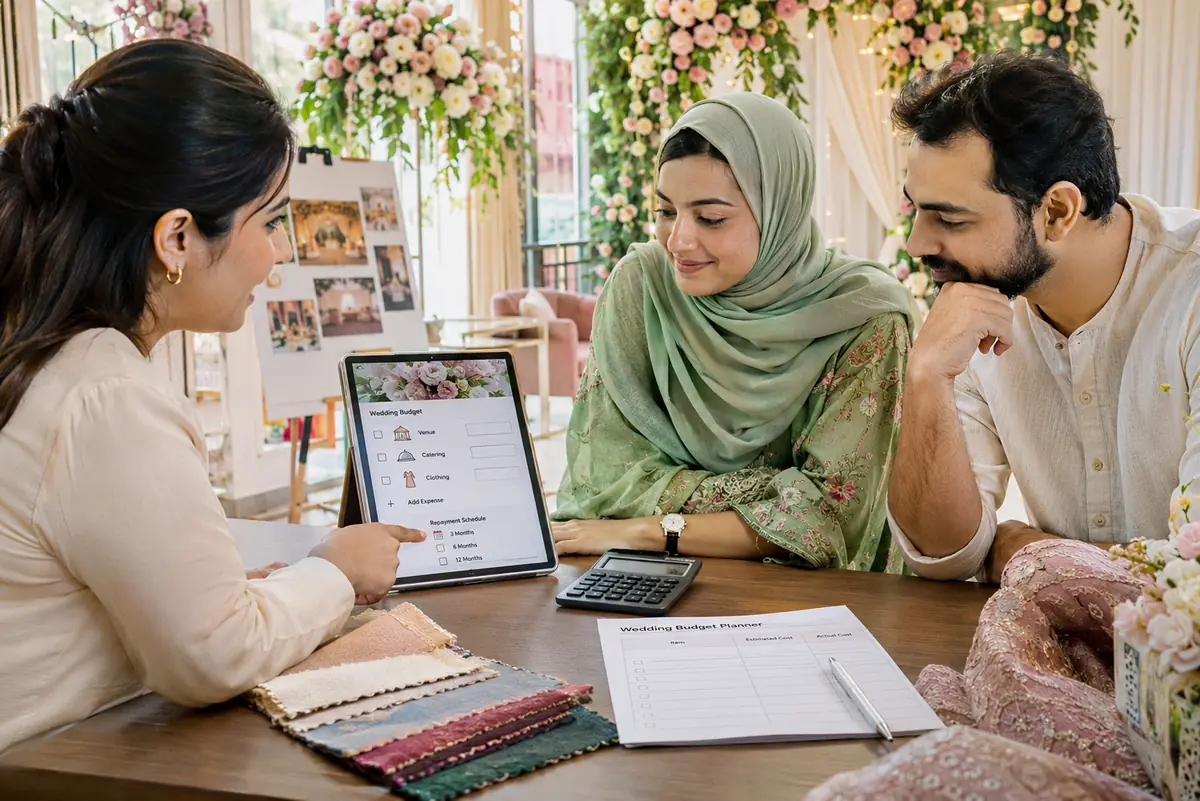
India Islamic P2P loans for weddings are interest-free arrangements through which families borrow from individuals, community funds or trusts to pay for marriage costs, repaying only the principal. They concern couples and parents who want to finance a nikah, mehr, ceremony and household setup without conventional interest. Regulated NBFC-P2P apps licensed by the Reserve Bank of India charge interest, so genuine Qard Hasan help generally comes from relatives, mosque committees, welfare societies and charitable funds, and a modest celebration reduces the need to borrow.
The cost of marriage and the pressure to borrow
Marriage in India often involves many events: engagement, nikah, walima, clothing, jewellery, catering, venue and travel for guests. Social expectations can push families to spend far beyond their means.
Debt taken for a single day can burden a household for years. Parents sometimes sell property or borrow at high rates from moneylenders to meet demands, which creates stress that outlasts the celebration.
Islamic teaching favours simplicity in marriage. The Prophet is reported to have said that the best marriage is the one with the least burden, a reminder that lavish spending is not required for a blessed union.
India Islamic P2P loans for weddings: how it works in practice
Marriage has long been a recognised purpose for benevolent loans. A relative or a fund lends a sum for the nikah and related costs, and the family repays that sum in instalments.
Because only the principal returns, the family's burden is predictable. Repayment is often arranged around a bridegroom's earnings, harvest income or the receipt of an expected payment.
- agree the amount in writing before the date is fixed
- set repayment dates that suit the family's income
- avoid borrowing for items that are not needed
- inform both families of the arrangement to prevent surprises
Many mosque committees and welfare societies run special funds for marriages, particularly for orphans and daughters of poor families.
Mehr, dowry and what the loan should cover
The mehr is a mandatory gift from groom to bride, and it belongs to her. A loan to pay mehr is possible, but it should be recorded clearly as the groom's debt.
Dowry demands, common in parts of India, are contrary to Islamic ethics and are illegal under Indian law. Borrowing to meet a dowry demand compounds the injustice, and families should refuse to take part.
A loan should cover legitimate costs such as the walima meal, essential clothing and basic household items. Spending on elaborate shows, large guest lists or competitive display is better avoided, since it raises debt without adding to the marriage's blessing.
Where regulated P2P apps fit
NBFC-P2P platforms are registered with the Reserve Bank of India and connect lenders and borrowers. They cannot lend their own money, guarantee repayment or promise returns.
A borrower may have at most Rs 10 lakh outstanding across platforms, a single lender may place at most Rs 50,000 with the same borrower, and loans end within 36 months.
Since lenders on these apps expect a return, loans carry interest. Families seeking a strictly interest-free route should not treat them as a substitute for Qard Hasan. Wedding loans advertised with instant approval deserve special caution, because a hurried decision made under social pressure is a favourite opportunity for scams.
Fund-raising within the extended family
In many families, marriage costs are shared among siblings, uncles and cousins. A structured version of this custom treats each contribution clearly as a gift or a loan.
One person can act as treasurer, keeping a list of who gave what and when it will be returned, if at all. This avoids resentment months later, when memories differ.
Where several relatives each give a small loan, the combined sum can be repaid in one instalment from the family's collective capacity, which is often easier than depending on one source.
Planning a wedding budget that avoids debt
A realistic budget is the first protection against borrowing. Families can sit together, list every cost and decide what is essential.
- fix a ceiling and stay within it
- start saving months or years before the date
- hold events at home or a community hall in place of an expensive venue
- share costs between families according to custom and ability
- track spending with a simple list
Many community leaders now encourage collective weddings, where several couples marry at the same event and costs are shared. These reduce expense, protect families who cannot afford a large function and encourage simplicity.
Special cases: second marriages and widow remarriage
Marriage support is not limited to first weddings. Widows, divorcees and orphans often face greater financial difficulty, with fewer relatives able to help.
Community funds give priority to such cases, since Islamic teaching places great emphasis on caring for vulnerable members. A small, quiet nikah that meets the legal and religious requirements is encouraged over a large function.
Families supporting such marriages should still keep clear records of any money advanced, so that the arrangement is respectful and transparent for everyone.
Zakat, gifts and community help
Where a family truly cannot afford a basic wedding, zakat funds and charitable gifts can help without any repayment, depending on the rules for eligible recipients. Relatives often contribute in kind, with cooked food, clothes or the loan of a venue.
Accepting help is not a source of shame. Community support for marriage is a recognised virtue, and giving to a couple is rewarded.
Families should still keep a record of contributions so that any loan portion is identified and repaid, and gifts are acknowledged with thanks.
Risks, frauds and safety checks
Unscrupulous agents prey on families in a hurry. Matrimonial schemes that ask for upfront fees, apps that demand contact access and lenders who refuse to give a written agreement should be avoided.
- confirm the legal identity of any lender and the RBI registration of any app
- never pay a fee to receive a loan
- read repayment terms and ask questions
- do not pledge a home or land for a ceremony
- keep a copy of every document
This information is general and not personal advice, and it is not a loan offer.
Repayment and the start of married life
A young couple should not begin married life under a heavy debt. The agreement should leave room for the new household's expenses, such as rent and daily needs.
Repayment is easier when both families contribute and when the schedule is extended. Honest conversations between the borrower and the lender, including about delays, keep goodwill intact.
Once the loan is cleared, many families give a gift to the fund, so it can help the next couple.
Frequently asked questions
Can a family borrow for a wedding without interest in India?
Yes, mainly through Qard Hasan from relatives, mosque committees, welfare societies or charitable funds, which require only the principal back. Licensed P2P apps normally charge interest, so they are not a strictly interest-free option.
Should a wedding loan cover dowry?
No. Dowry demands are against Islamic ethics and are illegal in India. A loan should cover legitimate costs such as the mehr, the walima meal, essential clothing and household basics, kept within a modest budget.
How can a family avoid wedding loan scams?
Verify the lender's legal identity and RBI registration, never pay an advance fee, refuse apps demanding contact access and insist on a written agreement. Avoid decisions made in a rush under social pressure.
Further reading
- Zakat Foundation of India : Zakat Foundation of India is an Islamic charity that supports interest-free assistance and welfare projects, showing how families in need can seek help towards marriage costs without borrowing at interest.